Vision Foundation Models · LLM Post-Training · Medical AI
I am an AI Research Scientist at Lunit Inc., working on foundation models and post-training for medical AI. My work spans the full learning pipeline — from self-supervised vision models for histopathology to post-training and alignment of large medical language models — with a focus on reliability and adaptability in safety-critical deployment settings.
I currently lead post-training for Chain of Evidence, a government-led Korean medical LLM consortium. Before this, I spent the first phase of my time at Lunit training ViT-based pathology foundation models (DINOv2/v3-style SSL) at scale across hundreds of terabytes of whole-slide imaging data, cutting inference compute by 60–80%. These two phases of work — one about learning stable representations, one about adapting large models to new knowledge without catastrophic forgetting — share a research thread I find increasingly interesting: the conditions under which learned policies generalize, forget, and break.
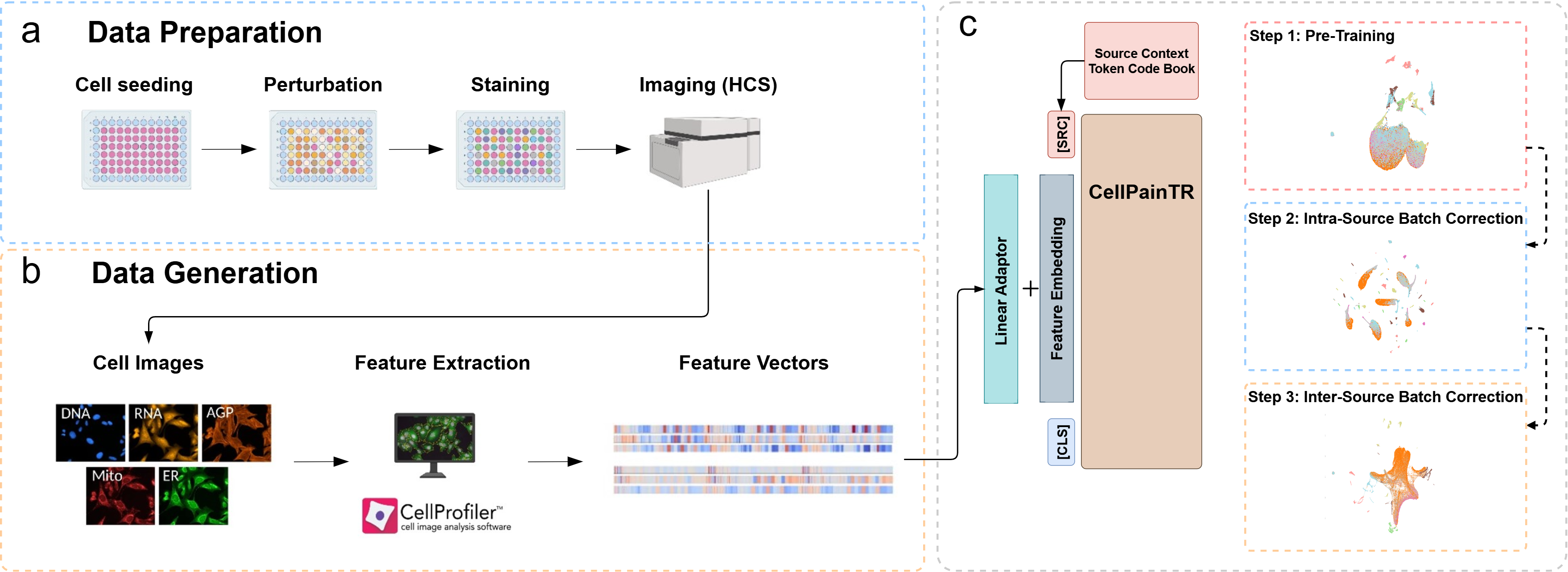
My research path began at Institut Pasteur New Caledonia, where I developed AI methods for pathogen detection under Prof. Nazha Selmaoui-Folcher — work that led to a Scientific Reports publication. This brought me to Seoul, where I joined the Pasteur International Unit AI3D, a joint initiative between Institut Pasteur Korea and Institut Pasteur Paris, led by Dr. Spencer Shorte and Dr. Christophe Zimmer, building computer vision pipelines for high-content screening and drug discovery. I then completed my Master's at the KAIST Graduate School of AI as a Global Presidential Scholar, advised by Prof. Ye Jong Chul (BISPL lab), developing foundation models for Cell Painting assays.